How a Luxury Linen Retailer Grew Purchases 95% on Google and 251% on Meta
ABOUT CLIENT
AND OBJECTIVES
client Challenges

Solution
Campaign strategy:
- Account restructure by brand and category
- Conversion value rule correction
- Budget and bid management by brand-level ROAS
- Margin-based product prioritization
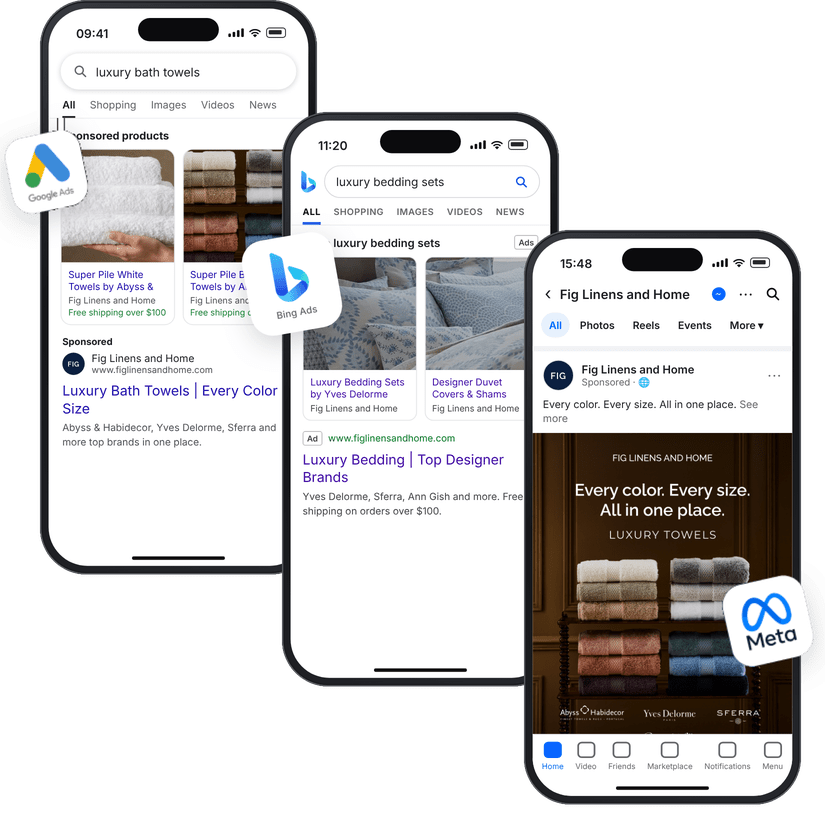
- Reach expansion with Bing Ads
- Purchase-optimized Meta Ads campaigns
- Catalog, audience, and landing page testing
- Structured creative testing
- Ongoing optimization and weekly reporting
VIDEN Growth rebuilt Fig Linens and Home’s paid search and paid social strategy around accurate attribution, purchase-focused optimization, and brand-level control across a catalog of 45+ brands.
On Google Ads, we restructured campaigns with brand-level segmentation for top brands with consistent conversion volume and category-level segmentation for secondary brands. This allowed us to manage budgets and bids by each brand’s actual ROAS rather than blended averages. Budget was weighted toward the top revenue drivers, while spend on smaller or return-heavy brands was capped and monitored against ROAS thresholds.
Low-margin products were excluded from active promotion, and high-end, higher-margin products were prioritized in the feed and bid strategy to align spend with actual profitability. We also audited and corrected the legacy conversion value rules that had been inflating reported ROAS account-wide. This gave both the client and Google’s algorithm a true performance baseline to optimize against.
To reach more shoppers, we replicated the best-performing Google Shopping structure on Bing Ads. This captured incremental, typically lower-CPC demand without rebuilding the segmentation from scratch.
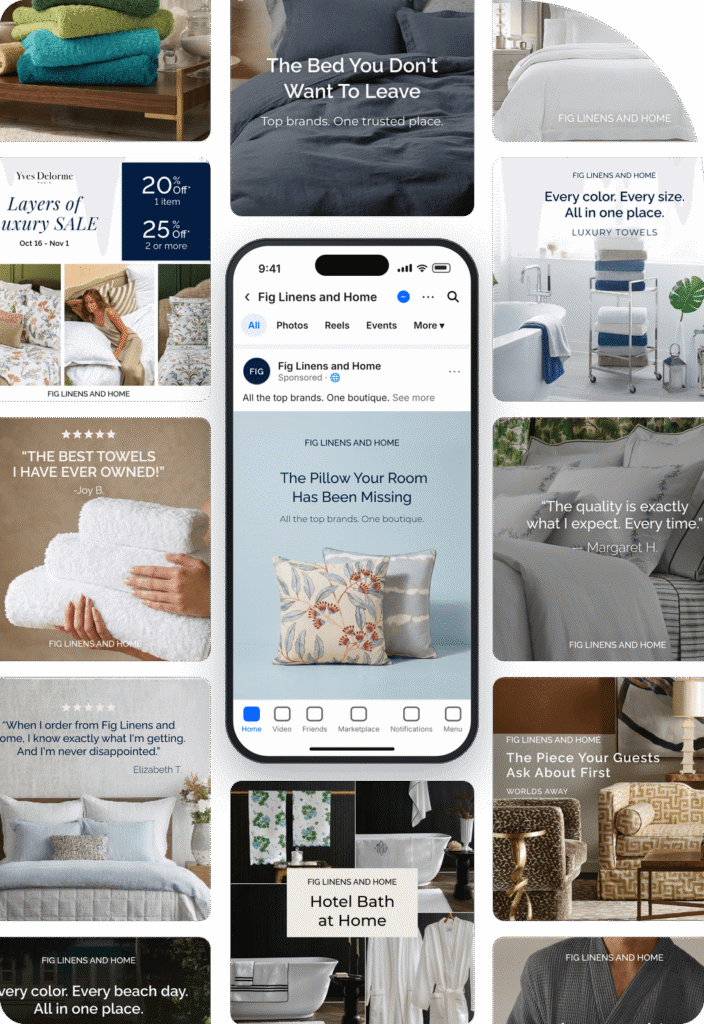
On Meta Ads, the account previously relied mainly on traffic and engagement campaigns, which generated plenty of low-cost clicks but limited purchase data. We shifted to purchase-optimized campaigns and tested brand-based and category-based structures to find the most effective setup. Catalog ads followed the same approach, with product sets grouped by brand, by category, and as a single full catalog, tested alongside different audience segments and landing pages.
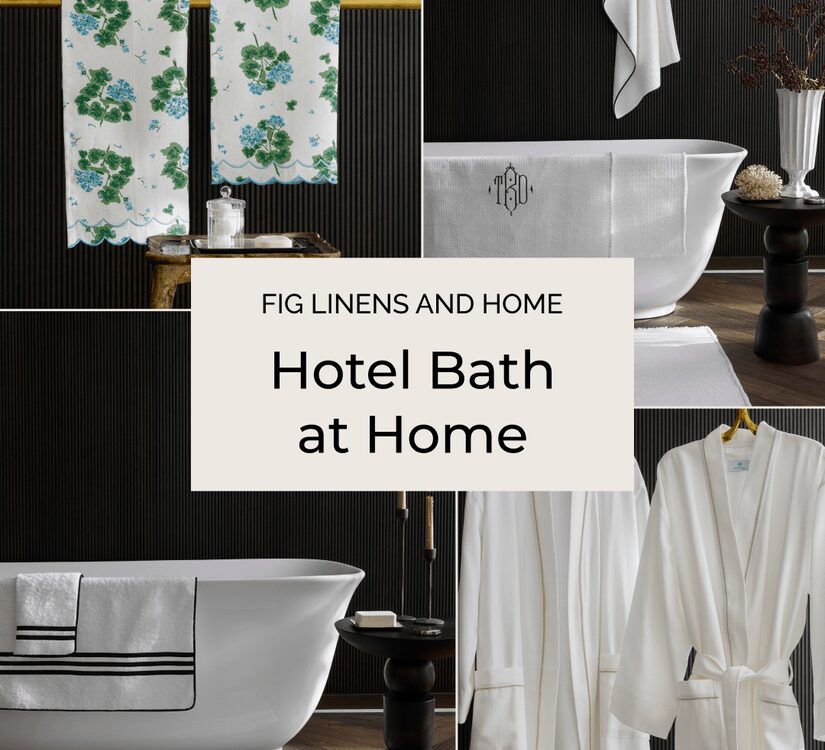
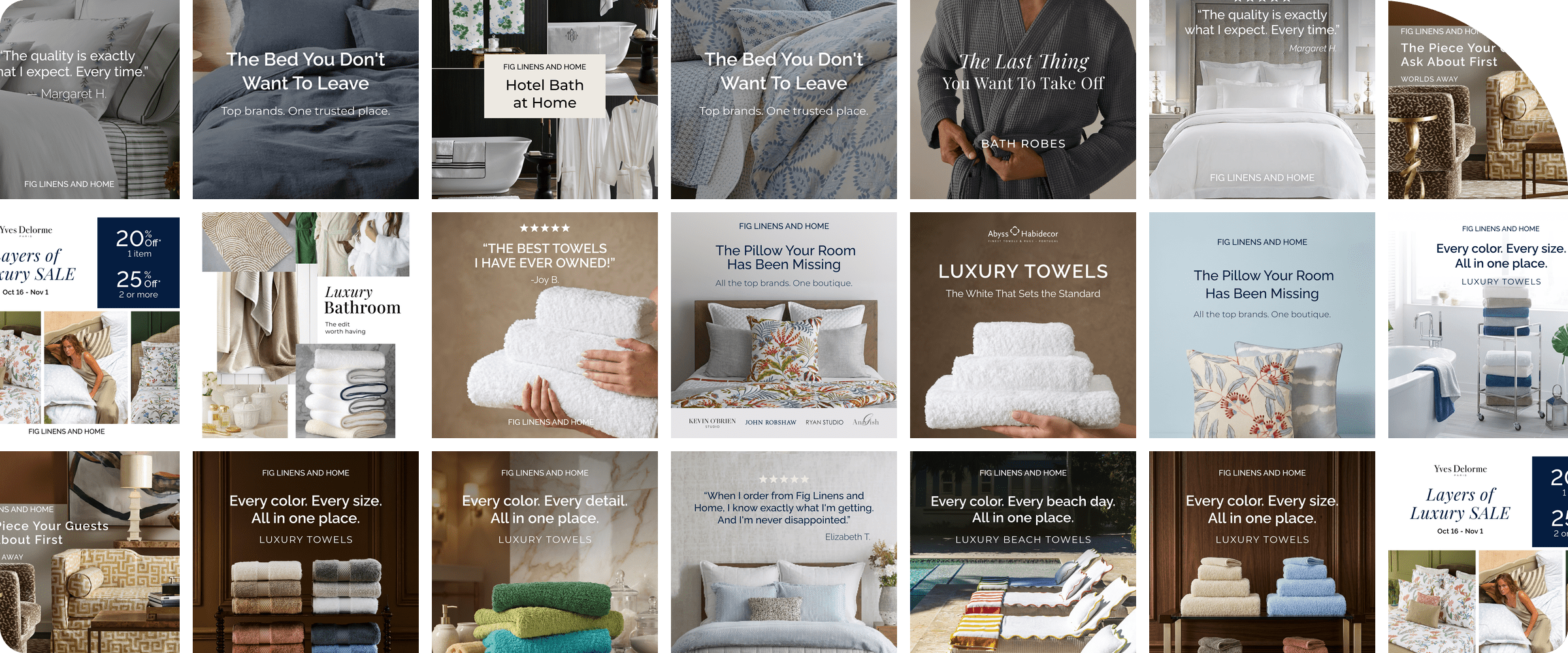
Creative testing followed a structured process across static and video ads, with formats, hooks, and messaging angles tailored to each brand and product category. Each round was based on ongoing research: we monitored what competitors were running on paid social, tracked which formats and angles were gaining traction in the category, and brought those insights into the next round of concepts.
Throughout the project, we tracked performance at the brand level and adjusted budgets based on results, accounting for return rates, order value fluctuations, and individual vendor requirements. Underperforming ads were paused, and the client received weekly performance updates.
client Results
VIDEN Growth helped Fig Linens and Home grow purchases on both paid search and paid social while keeping spend tied to real profitability:
Google Ads
Compared to the same period last year:
- Ad spend: +36%
- Purchases: +95%
- Original conversion value (excluding value rules): +130%
- ROAS: +68.7%
Meta Ads
Compared to the same period last year:
- Ad spend: +153%
- Purchases: +251%
- Revenue: +172%
- ROAS: +7.8%
Case Studies