
The average online shopping cart abandonment rate is 70.22%, according to Baymard Institute. Yet many eCommerce businesses still struggle to understand where customers drop off, which channels drive revenue, and what affects conversions.
The challenge is that eCommerce data is often fragmented across different platforms. Without a clear view of performance, it becomes harder to identify where customers drop off, what drives revenue, and which areas need improvement.
eCommerce analytics tools help bring this data together and turn it into actionable insights. In this article, we’ll compare 10 of the best eCommerce analytics tools, their key features, and the use cases they’re best suited for.
What Is an eCommerce Analytics Tool?
An eCommerce analytics tool is software that collects, organizes, and analyzes data from your online store and connected channels. It can bring together information from eCommerce platforms, advertising tools, CRM systems, payment providers, and customer behavior tracking.
Depending on the platform, eCommerce analytics tools can track:
• Website traffic and traffic sources
• Conversion rates and sales funnels
• Customer behavior and engagement
• Marketing attribution and campaign performance
• Customer lifetime value and retention
• Revenue, profit, and other financial metrics
These insights help businesses identify where customers drop off, understand which channels drive revenue, measure campaign performance, and make better decisions about growth. Some tools focus on a specific area, while others combine multiple data sources into one dashboard.
eCommerce Analytics Tools Compared
The best eCommerce analytics tool depends on what you want to measure, which platforms you use, and how much data you need to bring together. Here is a quick comparison of 10 popular options and their main strengths.
| Tool | Best for | Key Analytics | Main Integrations | Pricing |
| Google Analytics 4 | Free website and eCommerce analytics | Traffic, customer journeys, funnels, conversions, attribution | Google Ads, Search Console, BigQuery, most eCommerce platforms | Free |
| Triple Whale | Shopify and DTC analytics | Attribution, ad performance, creative analytics, profitability, cohorts | Shopify, BigCommerce, WooCommerce, Amazon, Meta, Google Ads, TikTok, Klaviyo | Free and paid plans |
| Northbeam | Advanced marketing attribution | Multi-touch attribution, incrementality, media mix modeling, ad performance | Shopify, other eCommerce platforms, major advertising channels | Paid, quote-based |
| Lifetimely | LTV and profitability analysis | Customer lifetime value, cohorts, retention, CAC, P&L | Shopify, Amazon and marketing platforms | Free tier and paid plans |
| Glew.io | Multichannel commerce analytics | Sales, customers, marketing, products, inventory, LTV, profitability | Shopify, WooCommerce, BigCommerce, Amazon, Google Analytics, advertising and email platforms | Paid and custom plans |
| Daasity | Centralized eCommerce data | Sales, inventory, marketing, profitability, custom reporting | Shopify, Amazon, BigCommerce, Magento, Walmart, Meta, Google Ads, Klaviyo and retail data sources | Paid and custom plans |
| Polar Analytics | Unified DTC reporting | Business intelligence, attribution, CAC, LTV, profitability, incrementality | Shopify, Amazon, Meta Ads, Google Ads, TikTok, Klaviyo and 300+ connectors | Custom pricing |
| Shopify Analytics | Native analytics for Shopify stores | Sales, traffic, conversions, products, customers, financial reporting | Shopify ecosystem | Included with Shopify plans |
| Peel Insights | Retention and cohort analytics | LTV, cohorts, retention, customer segmentation, profitability | Shopify, Amazon, GA4, Meta, Google Ads, Klaviyo and subscription platforms | Paid plans, free trial |
| Mixpanel | Customer behavior and funnel analytics | Events, funnels, cohorts, retention, engagement, session replay | Websites, apps and third-party data integrations | Free and paid plans |
10 Best eCommerce Analytics Tools for 2026
The best eCommerce analytics tools serve different purposes, from website and conversion tracking to marketing attribution, customer retention, and profitability analysis. Below, we compare 10 leading options based on their capabilities, integrations, pricing, strengths, and limitations.
1. Google Analytics 4
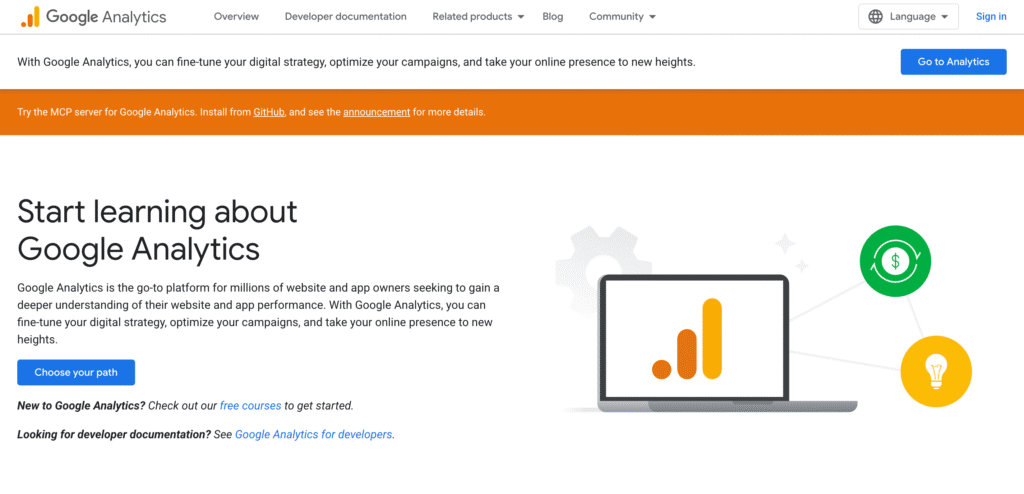
Google Analytics 4 (GA4) is a popular starting point for eCommerce businesses that want to understand website traffic, customer journeys, and conversions. Its event-based model tracks interactions across websites and apps and connects closely with Google’s advertising and marketing ecosystem.
VIDEN Growth is Google Marketing Platform Certified in Google Analytics 4 and Google Tag Manager.
- Best for: Free website and conversion analytics
- Key features: Traffic analysis, event tracking, conversion tracking, funnels, customer journeys, attribution, and audience reporting
- Integrations: Google Ads, Search Console, Google Cloud, and most major eCommerce platforms
- Pricing: Free; Analytics 360 is available for enterprise users
- Pros: Powerful free analytics, flexible event tracking, extensive Google integrations
- Cons: Requires careful setup, has a steeper learning curve than simpler eCommerce dashboards, and provides limited native profitability analytics
2. Triple Whale

Triple Whale is an eCommerce intelligence platform designed primarily for DTC brands. It brings marketing, sales, customer, and profitability data into one environment, with a strong focus on attribution and paid media performance.
- Best for: DTC brands with significant paid media activity
- Key features: Multi-touch attribution, ad performance, creative analytics, cohort analysis, profitability tracking, custom dashboards, and AI-assisted analysis
- Integrations: Shopify, BigCommerce, WooCommerce, Amazon, Meta, Google Ads, TikTok, Klaviyo, and other commerce and marketing platforms
- Pricing: Free plan available; paid pricing scales based on plan and annual GMV
- Pros: Strong attribution capabilities, eCommerce-specific reporting, broad marketing visibility
- Cons: Advanced capabilities can become expensive as a brand grows, and smaller stores may not need the full feature set
3. Northbeam

Northbeam specializes in advanced marketing measurement and attribution. It is designed for brands that need a clearer understanding of how paid channels contribute to revenue when native advertising platform attribution is not sufficient.
- Best for: Advanced attribution and media measurement
- Key features: Multi-touch attribution, incrementality testing, media mix modeling, omnichannel dashboards, and revenue attribution
- Integrations: Major advertising platforms, Shopify, other eCommerce platforms, and custom commerce setups
- Pricing: Starter starts at $1,500 per month and Professional at $3,500 per month; actual pricing can vary based on data volume
- Pros: Advanced marketing measurement, first-party attribution, strong capabilities for high ad spend
- Cons: High starting cost and more complexity than most small or early-stage stores require
4. Lifetimely
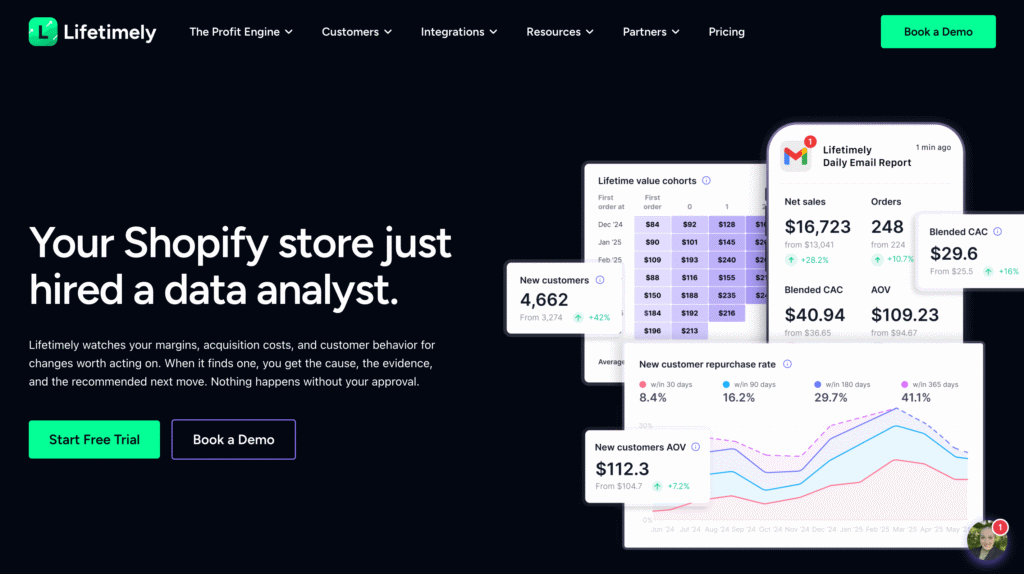
Lifetimely focuses on customer lifetime value, acquisition costs, retention, and profitability. Instead of concentrating primarily on website activity, it helps businesses understand the long-term financial value of customers and acquisition cohorts.
- Best for: LTV, cohort, and profitability analytics
- Key features: Customer lifetime value, CAC, cohort analysis, predictive LTV, retention, P&L reporting, and customer segmentation
- Integrations: Shopify, Amazon, advertising platforms, and other marketing data sources
- Pricing: Free for up to 50 orders per month; paid plans start at $79 per month and scale with monthly order volume
- Pros: Strong LTV and cohort reporting, useful profitability insights, pricing scales with store activity
- Cons: More specialized than all-in-one analytics platforms and less focused on advanced website behavior analytics
5. Glew.io
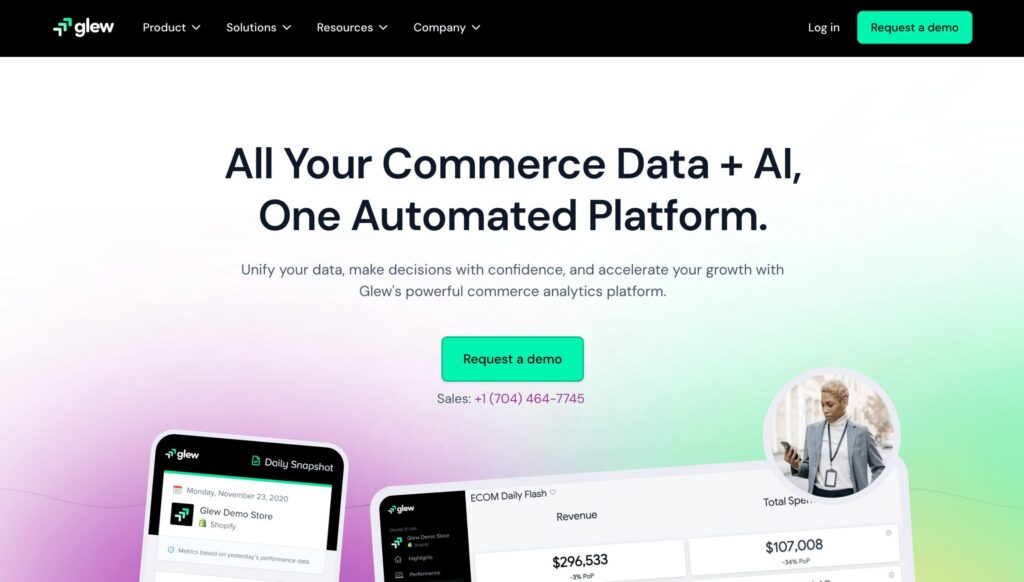
Glew.io combines customer, marketing, product, sales, and inventory analytics in one commerce reporting platform. Its broad set of pre-built KPIs makes it useful for businesses that want to reduce manual reporting across several departments.
- Best for: Multichannel eCommerce reporting
- Key features: 250+ KPIs, customer segmentation, LTV analysis, net profit reporting, product analytics, inventory analytics, and marketing performance
- Integrations: Shopify, WooCommerce, BigCommerce, Klaviyo, Mailchimp, advertising platforms, and other commerce tools
- Pricing: Paid plans; Glew Plus uses custom pricing
- Pros: Broad range of commerce metrics, strong segmentation, useful pre-built reporting
- Cons: Can be more platform than smaller stores need, while advanced data warehouse capabilities require higher-tier plans
6. Daasity
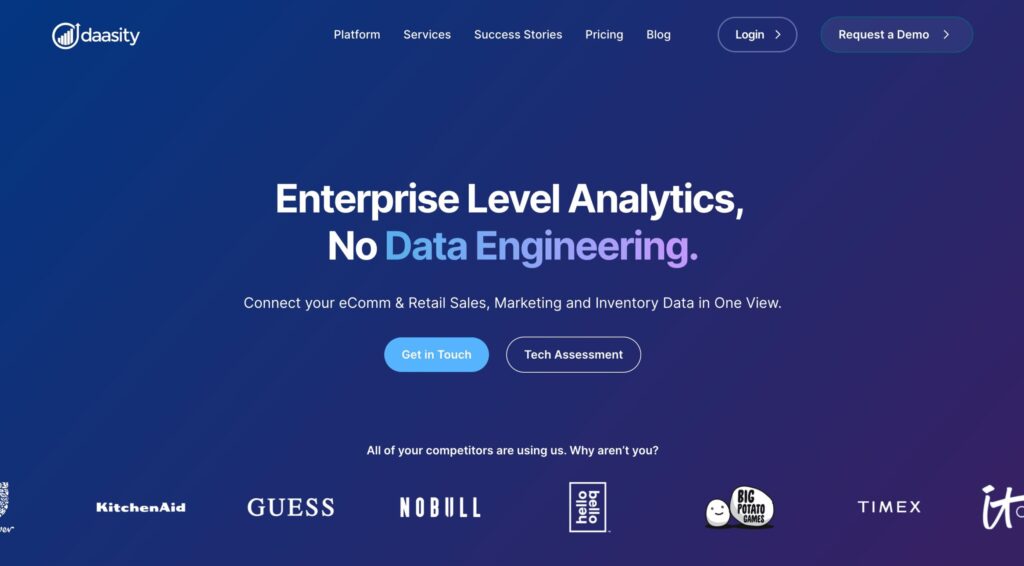
Daasity is built for commerce brands that sell across DTC, marketplaces, and retail. It centralizes data from multiple sources and creates a structured foundation for analyzing sales, inventory, marketing, and profitability.
- Best for: Centralized analytics across DTC, marketplaces, and retail
- Key features: Data integration, contribution margin reporting, marketing analytics, inventory reporting, custom dashboards, and data warehousing
- Integrations: Shopify, Amazon, BigCommerce, Magento, Walmart, Meta, Google Ads, Klaviyo, and retail data sources
- Pricing: Starter begins at $1,499 per month, Essentials at $1,999 per month, and Enterprise pricing is custom
- Pros: Strong cross-channel data infrastructure, extensive commerce integrations, useful for complex reporting needs
- Cons: High entry price and more implementation complexity than lightweight analytics tools
7. Polar Analytics
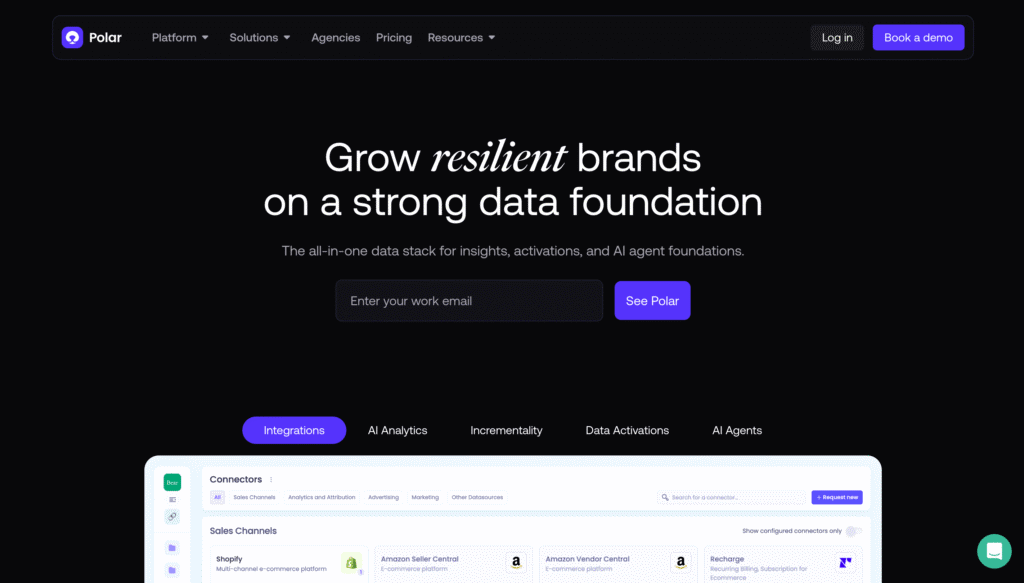
Polar Analytics is an eCommerce business intelligence platform that consolidates sales, marketing, customer, and profitability data. It is designed for growing brands that need a unified reporting environment rather than separate dashboards for every channel.
- Best for: Unified analytics and business intelligence
- Key features: Cross-channel reporting, multi-touch attribution, CAC and LTV analysis, custom metrics, profitability reporting, incrementality testing, and AI-assisted analysis
- Integrations: Shopify, Amazon, Meta Ads, Google Ads, TikTok, Klaviyo, and a broad range of additional data sources
- Pricing: GMV-based pricing; the Core Plan starts at $750 per month for brands with under $5 million in impacted annual GMV
- Pros: Combines multiple analytics functions in one platform, strong eCommerce focus, flexible reporting
- Cons: More expensive than basic reporting tools and may be excessive for small stores with simple analytics needs
8. Shopify Analytics
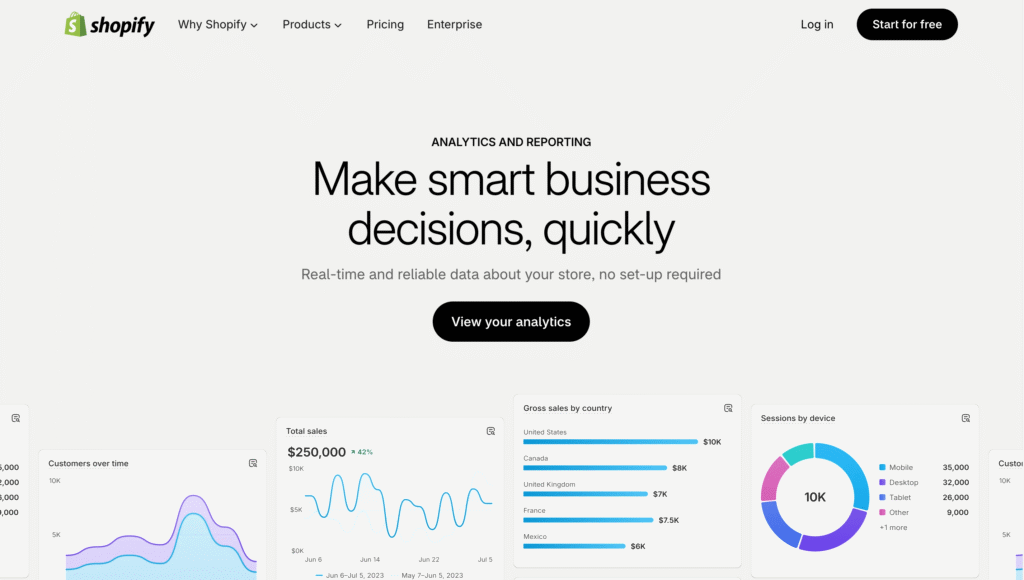
Shopify Analytics is the native analytics and reporting system available to Shopify merchants. It uses store data directly to provide insights into sales, traffic, customers, products, orders, and financial performance without requiring a separate analytics platform.
- Best for: Shopify merchants that want accessible built-in analytics
- Key features: Sales reports, traffic analysis, conversion metrics, customer reports, product analytics, financial reporting, and customizable dashboards
- Integrations: Shopify and apps connected through the Shopify ecosystem
- Pricing: Analytics is included with Shopify subscriptions; Basic starts at $29 per month with annual billing
- Pros: Built directly into Shopify, simple setup, no separate analytics subscription required
- Cons: Less advanced attribution and cross-channel analysis than specialized analytics platforms
9. Peel Insights
Peel Insights focuses on customer retention, cohorts, lifetime value, and segmentation. It is especially useful for brands where repeat purchases or subscriptions account for a meaningful share of revenue.
- Best for: Retention and cohort analytics
- Key features: LTV analysis, cohort reporting, retention metrics, RFM segmentation, customer journeys, profitability, and custom dashboards
- Integrations: Shopify, Amazon, GA4, Meta, Google Ads, Klaviyo, Recharge, Skio, and other subscription and marketing platforms
- Pricing: Essentials starts at $449 per month with annual billing or $499 monthly; a 7-day free trial is available
- Pros: Detailed customer and retention analytics, strong segmentation, useful subscription integrations
- Cons: Higher starting price than many basic analytics tools and a narrower focus than full business intelligence platforms
10. Mixpanel
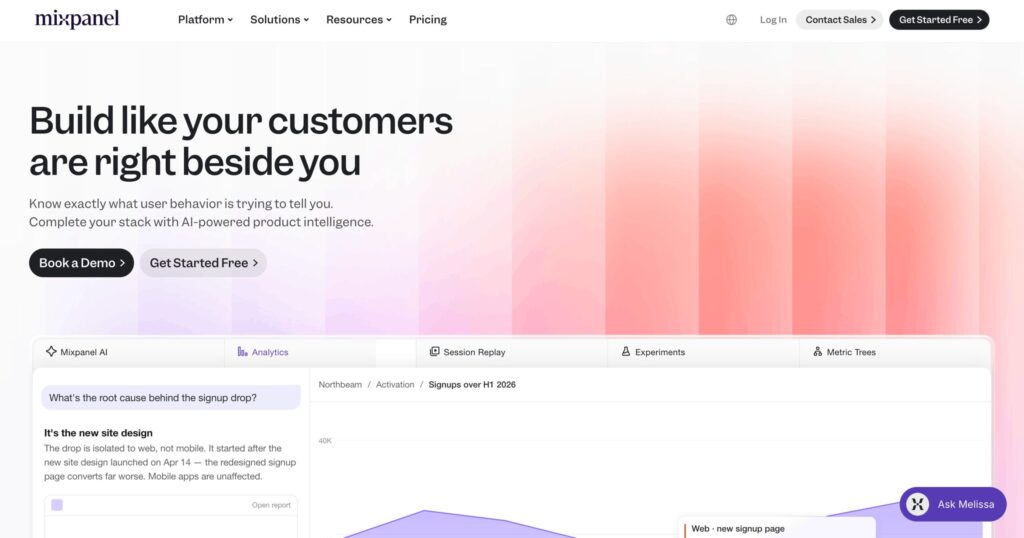
Mixpanel is a behavioral and product analytics platform that can help eCommerce businesses understand how users interact with websites and apps. Its event-based approach is particularly useful for analyzing funnels, engagement, retention, and specific customer actions.
- Best for: Customer behavior, funnels, and product analytics
- Key features: Event tracking, funnels, cohorts, retention analysis, engagement reporting, session replay, and experimentation
- Integrations: Websites, mobile apps, data warehouses, CDPs, and third-party data platforms
- Pricing: Free plan includes up to 1 million events per month; Growth pricing scales with usage and Enterprise pricing is custom
- Pros: Powerful behavioral analytics, flexible funnels and cohorts, generous free plan
- Cons: Not built specifically for eCommerce, so profitability, inventory, and commerce reporting often require additional tools or data integrations
How to Choose the Right eCommerce Analytics Tool
The right eCommerce analytics tool should match your business goals, data sources, team structure, and growth stage. Use the criteria below to compare your options.
Define Your Analytics Goals
Start with the metrics and business questions you need the tool to answer. These may include traffic, conversion rate, marketing attribution, customer lifetime value, retention, profitability, or overall revenue performance. A clear goal helps you avoid paying for features your team will not use.
Check Integrations
Make sure the platform connects with your eCommerce store, ad platforms, CRM, email tools, payment systems, and other key data sources. Strong integrations reduce manual work and make it easier to analyze performance in one place.
Consider Your Business Size
Small stores may only need basic traffic, sales, and conversion reports. Larger brands often require advanced attribution, cross-channel data, custom dashboards, user permissions, and support for more complex data structures.
Compare Pricing Models
Do not look only at the starting price. Check how costs change with GMV, order volume, ad spend, event volume, number of users, or data usage. A tool that looks affordable at first may become expensive as your business grows.
Evaluate Ease of Use
Choose a platform that your team can set up and use without constant support from developers or data analysts. Clear dashboards, simple navigation, pre-built reports, and straightforward configuration can reduce the time needed to find useful insights.
Review Dashboard and Reporting Flexibility
Check whether the platform supports custom dashboards, cohort analysis, segmentation, attribution reports, forecasts, and other reports that match your workflow. Flexible reporting is especially important if different teams need different views of the same data.
Assess Data Accuracy and Reliability
Look at how the tool collects, processes, and attributes data across channels. Reliable tracking is critical for decisions about ad spend, customer acquisition, retention, and profitability. If the platform relies on multiple data sources, check how it handles discrepancies between them.
Check Scalability
Make sure the platform can support more channels, larger data volumes, additional users, and more complex reports as your business grows. The right tool should remain useful when your analytics needs become more advanced.
Best eCommerce Analytics Tools by Use Case
Different eCommerce analytics tools solve different problems. The table below highlights the strongest options for several common use cases.
| Use Case | Best Tool | Why It Stands Out |
| Best overall for DTC brands | Triple Whale | Combines attribution, paid media analytics, customer insights, and profitability data in one platform |
| Best free option | Google Analytics 4 | Provides robust traffic, conversion, funnel, audience, and acquisition analytics at no cost |
| Best for advanced marketing attribution | Northbeam | Offers multi-touch attribution, incrementality analysis, and media mix modeling |
| Best for LTV and profitability | Lifetimely | Focuses on customer lifetime value, CAC, cohorts, retention, and profit analysis |
| Best for complex commerce data infrastructure | Daasity | Centralizes data across DTC, marketplaces, and retail for advanced reporting |
| Best for customer behavior analytics | Mixpanel | Offers strong event, funnel, cohort, engagement, and retention analysis |
FAQ
There is no single best eCommerce analytics tool for every business. Triple Whale is a strong choice for DTC analytics, Northbeam for advanced attribution, and Google Analytics 4 for free website and conversion analytics.
Google Analytics 4 is one of the strongest free options for eCommerce analytics. It can track traffic, user behavior, conversions, funnels, and acquisition channels without a subscription fee.
Yes. Google Analytics 4 can help eCommerce businesses track traffic, customer journeys, product interactions, and conversions. However, brands that need advanced profitability, retention, or attribution analysis may need a specialized eCommerce analytics platform alongside GA4.
A useful eCommerce analytics platform should track metrics such as conversion rate, average order value, customer acquisition cost, customer lifetime value, retention rate, revenue, profitability, and marketing channel performance. The exact metrics depend on the goals of the business.
Web analytics mainly focuses on website traffic and user behavior, while eCommerce analytics covers a broader set of business data. It can include sales, customers, products, marketing attribution, retention, lifetime value, inventory, and profitability.
Shopify includes built-in analytics that may be enough for smaller stores with basic reporting needs. Brands that need deeper attribution, customer segmentation, profitability analysis, or cross-channel reporting may benefit from a dedicated analytics platform.
Final Thoughts
A reliable eCommerce analytics setup should give your team clear data across the metrics that drive revenue, customer retention, and profitability. The tools in this list cover different parts of that process, from website behavior and attribution to LTV and business intelligence.
Need help with your eCommerce analytics strategy? VIDEN Growth can help you choose the right tools, build a reliable analytics stack, and turn your data into clear insights that support better business decisions and sustainable growth.